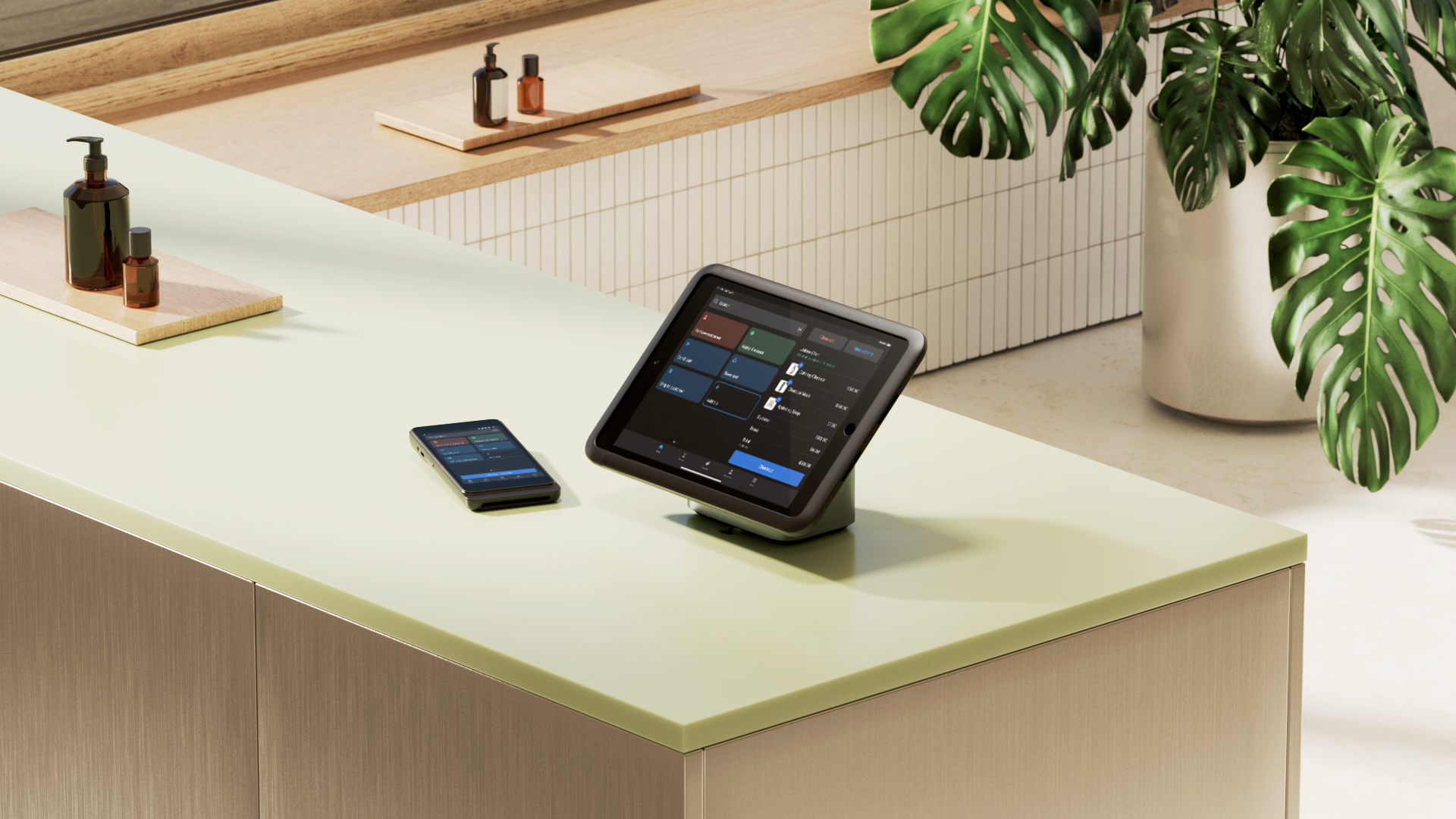
Online to offline (O2O) commerce is a hybrid experience that gives shoppers the convenience of online shopping without sacrificing in-person touchpoints. It covers purchasing online for in-store pickup, in-store returns of online purchases, and shopping appointments scheduled through digital channels.
While global ecommerce sales are projected to reach $3.8 trillion in 2026, retail accounted for almost 83% of total US sales in the second quarter of 2026. O2O commerce allows you to connect online shopping with in-store experiences to reach customers across both channels.
This guide explains what an O2O commerce strategy looks like, the benefits of turning ecommerce traffic into offline sales, and how online retailers can develop their own O2O strategies.
What is O2O commerce?
Online-to-offline commerce is a retail strategy designed to bring potential customers from online channels, such as Instagram, email, and digital ads, to a brick-and-mortar store to make a purchase or collect an order.
O2O commerce brings together techniques from online marketing and brick-and-mortar marketing. It turns ecommerce visitors into physical shoppers by:
- Offering in-store pickup of products purchased online
- Enabling purchases while at a physical store
- Allowing online purchases to be returned to the retailer’s brick-and-mortar location
O2O commerce is a form of omnichannel retailing that focuses on moving customers from online channels to physical stores. Omnichannel retailing more broadly connects the customer experience across online and offline channels.
Shopify’s unified customer data model enables brands to target their best buyers and act on buyer insights. O2O commerce is not only made possible but also more powerful on Shopify thanks to this model and its ability to drive high-converting, cross-channel personalized shopping journeys.
Online-to-offline vs. offline-to-online
With both online-to-offline and offline-to-online, customers move between digital and in-person channels throughout the shopping experience. The difference is in the order:
| Strategy | Online-to-offline | Offline-to-online |
|---|---|---|
| Start channels | Website, search, email, or social media | Retail stores and events |
| End goal | In-store purchase or pickup | Online order, account sign-up, or app download |
| Tactics | BOPIS (click-and-collect), and local SEO | QR codes, ship-to-home, and in-store returns |
How does O2O commerce work?
O2O commerce works in three stages: discovery online, digital commitment, and offline fulfillment. For example, a customer might discover your product through AI, visit your ecommerce website to buy it, and choose an in-store pickup option.
Connecting these stages requires coordinated customer, inventory, and fulfillment data:
- Unified data: Shopify’s unified data model brings inventory, order, and customer data into one centralized admin. This lets you identify customers and understand their activity across online and offline channels.
- Locations: See in real time how much stock you have at each location to direct online shoppers towards their closest offline location. Inventory transfers inside Shopify POS also let you redistribute stock to locations running low.
- Fulfillment routing: Let customers choose in-store pickup or click-and-collect at checkout. Shopify POS helps retail associates prepare orders for collection and notify customers when they’re ready.
O2O commerce business model benefits
While brick-and-mortar retailers primarily serve shoppers near their physical locations, O2O retailers can reach the 56.2% of adult internet users who buy something online every week. Here are the benefits of an O2O commerce strategy:
Give shoppers the in-person experiences they want
Salsify’s consumer research shows physical retail stores are the top product discovery channel in 2026. UPS’ report found 59% of customers prefer to shop in-store. An O2O strategy lets you cater to those shopping habits and make online shoppers aware of offline touchpoints.
Reach more customers
Not everyone passing by your brick-and-mortar stores will pop in when they get a chance to do so. Salsify’s 2026 research found over two-thirds of shoppers “webroom,” meaning they research a product online before buying it in-store.
When retailers use these online channels effectively, they can build niche audiences around their physical locations. This drives internet users toward brick-and-mortar stores, resulting in more foot traffic than if they relied on their physical stores alone.
BÉIS proved this by running pop-up events coordinated with their online presence, which led to a 30% increase in traffic in those local markets. Beyond foot traffic, customers acquired through in-person events have 20% higher average customer value over 12 months. Shopify’s Customer cohort analysis report lets you track this for your own activations.
Save money on logistics
Retailers can regionalize their inventory and dedicate a percentage of their store space to storing products that have been sold online. The buy online, pick up in-store (BOPIS) model, for example, helped Parachute save over $1 million in annual operational costs.
O2O commerce can also reduce retailers' reliance on third-party logistics (3PL) partners, cutting out costly middlemen and giving brands more control over their supply chain. You can also offer same- or next-day pickup for customers since the products are already in-store, eliminating last-mile delivery costs for those orders.

O2O commerce trends
Retailers can connect online and offline shopping experiences through several approaches, from in-store pickup to local delivery and returns:
- Buy online, pick up in-store (BOPIS)
- Local delivery and ship-from-store
- Webrooming with local SEO
- Showrooming with QR codes
- Buy online, return in-store (BORIS)
Buy online, pick up in-store (BOPIS)
Buy online, pick up in-store (BOPIS) services help drive online shoppers back to physical stores. This is also known as click-and-collect shopping: Customers can use a retailer’s ecommerce site to browse products, purchase those they like, and receive a notification when their order is ready for pickup at their local store.
Once you have the customers in-store, you have the opportunity to entice them to purchase more products. ICSC’s study found that 64% of shoppers made additional purchases when picking up online orders over the 2025 holiday weekend.
Shopify’s unified infrastructure simplifies the logistics of BOPIS orders. It syncs accurate real-time inventory levels at each retail store, so online shoppers can select their closest location with available products for in-store pickup. If an item is out of stock at the pickup location, retailers can set up automatic inventory transfers from other locations to fulfill the order. This is sometimes called buy online, ship to store (BOSS), since the item must first be moved to the pickup location.
Retail associates then use Shopify POS Pro to prepare BOPIS orders and trigger a notification that the order is ready to collect.

Local delivery and ship-from-store
Home delivery couriers like UPS and DHL deliver purchased items to self-service lockers. Customers can search by ZIP code to find nearby lockers at checkout and stop by when they receive the notification that their order is ready to pick up.
Alternatively, retailers can offer local delivery directly from their stores. Choose to do your own delivery to people within a certain radius of a store. Limit your local delivery area to specific postal codes to avoid putting too much pressure on your same-day delivery promise. For example, Molson Coors uses Shopify to offer local delivery to customers in Toronto, Canada.
You could also fulfill orders from a customer’s local store instead of a distribution center using ship-from-store. Apparel brand Paige fulfilled 17% of online orders during their busiest holiday months with this approach. Head of global retail operations Sofie Kuehnen says: “Being able to ship customer orders from store locations closest to them that have the inventory was amazing for our business.”
Webrooming with local SEO
Webrooming happens when shoppers research a product online before buying it in-store.
Local SEO can help potential customers find your business online during their search. The aim is to show up in local search results for terms like “fashion stores near me” and provide enough information to convince shoppers to visit your store. Some 84% of shoppers have made a search like this in the last three months.
Create a Google Business Profile for each location where you have a physical store. Optimize each listing to include opening hours, categories, photos, and other details like parking availability. Encourage customers to leave reviews to cater to the 97% of shoppers who read reviews for local businesses.
Shopify’s Google & YouTube channel can sync store-level inventory for local listings and ads. It pulls on the same unified data that already powers your ecommerce store and point-of-sale (POS) system.
Showrooming with QR codes
Showrooming is when customers view a product in-store and buy online. It’s the opposite of webrooming and another common way to shop: 53% of customers showroom, according to Salsify.
QR codes can connect in-store product discovery with online purchasing and other digital experiences. Retailers can place them in areas with high foot traffic, such as checkout desks and fitting rooms. Customers can scan these QR codes when they’re shopping at a physical location to:
- View product details and purchase an item online
- Join a virtual queue outside the store
- Retrieve their curbside pickup order
- Redeem loyalty points on in-store purchases
- Scan a product they’re returning through a mobile app
- Participate in customer feedback surveys
The Shopcodes app lets you create scannable QR codes that link to product pages or checkout pages. For example, you might place one above your display of bestselling products with retail signage directing shoppers online. When scanned, the link sends shoppers to a product page where they can complete their purchase.

Buy online, return in-store (BORIS)
Buy online, return in-store (BORIS) is a type of O2O commerce that happens after the customer has placed their order. Ryder’s 2026 study found 86% of consumers have picked up or returned an online purchase in-store. Over half of them say they often make additional purchases while they’re in-store, up 17% year over year.
Aside from the chance to make another sale, returning items in-store is convenient. Customers can drop off items as they pass your store without paying return postage fees and have a refund or exchange processed with Shopify POS.
BORIS also offers quicker inventory turnaround times as stock isn’t sitting in the mail. Returned goods can be inspected and, if eligible for resale, made available sooner.
How to implement O2O commerce
Here’s how to implement an online to offline strategy for your omnichannel business:
1. Set your objectives and map the journey
Start by asking what you’re trying to achieve with your O2O integration. Ask yourself: How will O2O impact our revenue, customer satisfaction, and market position? What key performance indicators (KPIs) will we use to measure success?
Next, map out the customer journey across all touchpoints, including how they move between online and offline channels. This is where a unified customer data model becomes important. The single customer view inside Shopify merges first-party data you’ve collected from customers across channels, so you can better understand their shopping behavior:
- Research products on your website
- Check in-store availability
- Visit a physical location for a hands-on experience
- Make a purchase via mobile app
- Pick up the item in store
Use your objectives and customer journey map to create a roadmap for O2O implementation. Break down your strategy into manageable phases, each with clear objectives and timelines. For example, depending on your existing infrastructure and business priorities:
- Phase 1 (3–6 months): Unify customer data and upgrade your ecommerce platform.
- Phase 2 (6–12 months): Implement BOPIS and real-time inventory tracking.
- Phase 3 (12–18 months): Launch personalized mobile app and in-store digital experiences.
Remember, your O2O strategy isn't set in stone. Schedule regular review points when you can assess progress, gather feedback, and make necessary adjustments.

2. Set up the systems
O2O success hinges on smooth data flow between online and offline touchpoints. Examine your enterprise ecommerce platform, in-store POS systems, mobile apps, and any other customer-facing technology. The key question here is interoperability: How well do these systems communicate with each other?
First, evaluate how your customer data is structured:
- Are customer profiles fragmented across different systems?
- Can you connect customer activity from online browsing to in-store purchases?
- Do you have the necessary data points to enable truly personalized experiences?
This assessment may reveal gaps in your data collection or integration, like siloed data across different departments or channels. Identifying these issues now will save significant time and resources down the line. Shopify’s unified customer data model can help with your unification efforts.
Next, prioritize your technology needs based on your infrastructure assessment:
- Customer data platform (CDP): A centralized system that consolidates customer data from all touchpoints, providing a single comprehensive view of each customer.
- Extensible ecommerce platform: Your online storefront should be a flexible, extensible system that can support personalized product recommendations, integrate with inventory systems, and offer flexible fulfillment options.
- Checkout process: How flexible is your current checkout system? Can it be easily customized to meet specific O2O scenarios? Does it support accelerated checkout options that customers increasingly expect?
- Point-of-sale (POS) system: Syncs with your online platforms in real-time. Shopify POS also provides staff with access to customer profiles and purchase history.
- Inventory management system (IMS): Provides a unified view of inventory across all locations and channels.
- Mobile app: A way to support in-store navigation, mobile payments, and digital loyalty cards.
- Analytics and business intelligence: To truly understand your O2O performance, you need advanced analytics capabilities, like Shopify Analytics.
While the up-front cost of these technological investments may be significant, they can support long-term O2O success. Unified commerce systems will enable you to deliver the personalized, seamless experiences that customers expect, while also reducing costs. Shopify’s total cost of ownership (TCO) is up to 36% lower than its competitors.’
3. Train your staff and adapt your supply chain
Reassess your inventory management, focusing on real-time visibility across all channels to help prevent stockouts and overstock situations. Sofie says this is why Paige uses Shopify: “We feel confident showing customers what's available in stores because we know the data is accurate.”
Consider adopting a distributed fulfillment model to enable faster deliveries and support options like BOPIS. This is where Shopify Fulfillment Network (SFN) can help.
SFN connects retailers with third-party logistics providers (3PLs) that manage inventory, fulfillment, and shipping through integrations with Shopify. It can help you meet customer expectations for quick delivery while maintaining cost-efficiency.
Train staff on the approach you take so they understand how online orders, store inventory, and fulfillment processes work together. They should be able to handle both online and offline interactions consistently. Use role-playing exercises to practice scenarios like handling online orders in-store or assisting customers with mobile app features during their visit. Combine this with a tutorial on how to access and use customer data inside Shopify POS to personalize experiences.
“If we weren’t using Shopify POS, I think our team would have a harder time building rapport with our customers and staying in touch with them,” says Joanna Puccio, assistant store manager at Diane von Furstenberg.
“With Shopify, my staff can log customer information in one place and refer to it whenever they need. They can reach out to clients for things they’ll actually be interested in, which makes our customer experience feel so much more curated and personal.”
4. Launch campaigns across both channels
Personalization should be at the core of your O2O marketing strategy. Attentive’s 2026 report found 4 in 5 consumers are more likely to ignore brands that send irrelevant messages, while 73% say they’re more likely to buy when given product recommendations that feel relevant to their needs and preferences.
Use customer data unified in Shopify to create tailored experiences at every touchpoint. Segment your audience using data from these profiles. That might include location-based segments (e.g., people who’ve bought from your Chicago store) and behavioral segments (e.g., people who’ve already used BOPIS). Sidekick can help you create these segments.
Customer segments provide the foundation for personalized outreach through Shopify Messaging, such as:
- Personalized product recommendations based on what they’ve shown interest in online
- Targeted BOPIS promotions when a shopper’s favorite product is available at their nearest store
- Customized omnichannel loyalty programs for shoppers who earn and redeem rewards across channels
Shopify Audiences lets you identify and reach high-intent buyers similar to your best customers, which helps cut customer acquisition costs (CAC) by up to 50%. You can also build custom retargeting lists that exclude 40% more existing customers, on average, to optimize ad spend.
5. Measure offline attribution
Offline attribution is difficult if online behavior doesn’t track in-store. It’s a challenge shared by marketers: Nielsen’s 2025 report found just 32% track media spend across digital and traditional channels holistically.
Shopify’s unified data model has an advantage since customer, order, and sales data can be connected across online and offline channels. Cross-channel reporting shows where customer activity and sales occur, and marketing attribution helps determine which campaigns contributed to those outcomes. Combine Shopify’s native reporting capabilities with third-party tools to track how customers move between channels, including:
- Google store visit conversions: Google Ads estimates how many people visit your store location after interacting with an ad, helping you assess which campaigns drive foot traffic.
- Campaign discount codes: Create unique discount codes for each strategy or retail activation. Shopify Analytics reports show how frequently those codes are used to help measure purchases associated with each campaign across channels.
- Shopcodes: Monitor how customers interact with QR codes in-store with the Shopcodes app. It tracks how many people scan them and the actions they take afterwards, including purchases.
- Online sales by location: Retail stores can provide a halo effect where online sales in that region increase around events. This is true for BÉIS, whose CEO Adeela Hussain Johnson says: “We see an average 30% increase in traffic during pop-up activation and an average revenue lift of 10%.”
These methods help measure campaign performance, but none can track every customer interaction or prove what caused a sale.
Sidekick, the AI assistant built into Shopify, can help here. Ask questions like “How many BOPIS customers made another purchase in-store?” or “Which items were bought online and returned most in-store?” Sidekick can help analyze available store data and present relevant findings, all within the Shopify admin.
O2O commerce examples
Here are three brands that manage online to offline strategies with Shopify’s unified commerce platform:
Framebridge: Connecting online and in-store shopping
Framebridge operates a network of over 30 retail stores alongside their online store. They use Shopify to build what they call a persistent cart attached to each customer profile to give customers a unified experience regardless of where they shop. The cart highlights their BOPIS and in-store framing options to direct online shoppers towards their closest store.
“We find that our customers like being able to consult with a professional in-person before going home and checking out online. Or placing an order and shipping it to a local store,” says senior director of product Brian Bergman. “So hopping between channels has to feel seamless.”
Unified profiles formed just one part of Framebridge’s migration to Shopify. They’ve since managed to increase overall add-to-cart rates by 15.3% and boost conversion rates by 7.5%.
The Cambridge Satchel Company: AR experiences for online shoppers
The Cambridge Satchel Company grew into an iconic British brand that caught the attention of major fashion houses like Vivienne Westwood and Comme des Garçons.
To bridge the gap between online and offline shopping experiences, Cambridge Satchel Company partnered with Shopify's AR team to bring an element of the in-store experience online. Now, online shoppers can virtually place 3D images of bags in their environment via smartphone, mimicking the in-store "try-on" experience.
"The fact that we can offer this kind of AR experience with our budget puts us on a level playing field with people who have much greater resources than we do," says Deane. "I've no doubt that if big luxury brands create this kind of AR experience [in-house], they would be paying 10 times what we are."
Beauty Heroes: Personalization online and offline
Prior to working on their O2O commerce strategy, Beauty Heroes’ ecommerce sales were soaring, so much so that they decided to break into the offline market and open their first brick-and-mortar store in Novato, California.
Beauty Heroes used Shopify POS to aggregate sales data across both online and offline channels. They also encouraged existing customers to shop in-store by delivering targeted promotions based on purchase history, which improved customer loyalty and retention.
“Our big requirement was that we wanted our customers to have one profile whether they shopped online or in-store,” says founder and CEO Jeannie Jarnot. “When evaluating other POS systems, Shopify POS was by far the most comprehensive. Since we opened the store, it’s been great to keep all data, customer history, and contact information in one profile.”
Read more
- Multichannel Marketing: Definition, Data, and a Strategy To Sell Anywhere
- How To Conduct an Enterprise SEO Audit
- 8 Best Omnichannel Retailers in 2024: What You Can Learn
- Mobile Site Speed Optimization: How to Speed up a Mobile Site
- What is Omnichannel Marketing? A Comprehensive Guide
- The Ultimate Omnichannel Marketing Strategy: How To Get It Right
- Omnichannel Commerce: The What, Why, and How of Retail’s Future
- Win Online and Retail Using O2O Marketing to Boost Sales
- 5 Best Marketing Automation Tools to Lean on Inside Shopify
- Wholesale Ecommerce: How It Works, Types, and Benefits to Wholesalers
Online to offline commerce FAQ
What is an O2O strategy?
An O2O strategy is a strategy of driving online customers toward a physical store. As part of their strategy, retailers use social media, content marketing, and display advertising to target local customers. The aim is to encourage them to visit a brick-and-mortar store to make the purchase (or collect one they’ve made online).
Do I need physical stores to use O2O commerce?
You don’t need permanent physical stores to use O2O commerce. For example, luggage brand BÉIS hosts pop-up shops in its target audience’s cities. Shoppers can interact with their products in person and try out the items they’ve previously viewed online.
What are the challenges of O2O commerce?
Challenges of O2O commerce include:
- Difficult offline attribution if in-store behavior doesn’t connect with online data
- The need for real-time inventory data across online and offline channels
- Inconsistent experiences as customers switch between channels
- The logistics of omnichannel order fulfillment, such as buy online, pickup in-store
What is online to offline marketing?
Online to offline marketing is a type of campaign that uses digital channels to move online shoppers towards a physical location. An example would be a brand that uses Google Ads to show local inventory available for same-day pickup at the shopper’s closest retail store.
What does O2O stand for?
O2O stands for online to offline. In a commerce context, it describes how brands move online customers towards in-person shopping.